
Keeping Your Rabbits Safe From Predators


There is always a trade-off between keeping an animal safe, and providing that animal with a rich and happy life.
There’s no doubt that the rabbits in a large commercial rabbit enterprise are safer than the rabbits in my paddock. The factory rabbit’s air conditioned, bio-secure, stainless steel lined environment eliminates many of the risks that most small farm animals or pets are subjected to on a daily basis
The factory farmed rabbit won’t get bitten by snakes or rats, or whisked into the air by an eagle. They won’t be snapped up by a coyote, or infected with disease from wild rabbits.

I protect my rabbits against some of these risks, to a degree. And I’ll talk about how I do that below. But that protection falls far short of the safe environment of the caged rabbit. So do my rabbits have a better life? I think so, but it’s a complex topic and each of us will have their own take on lack of risk vs environmental enrichment.
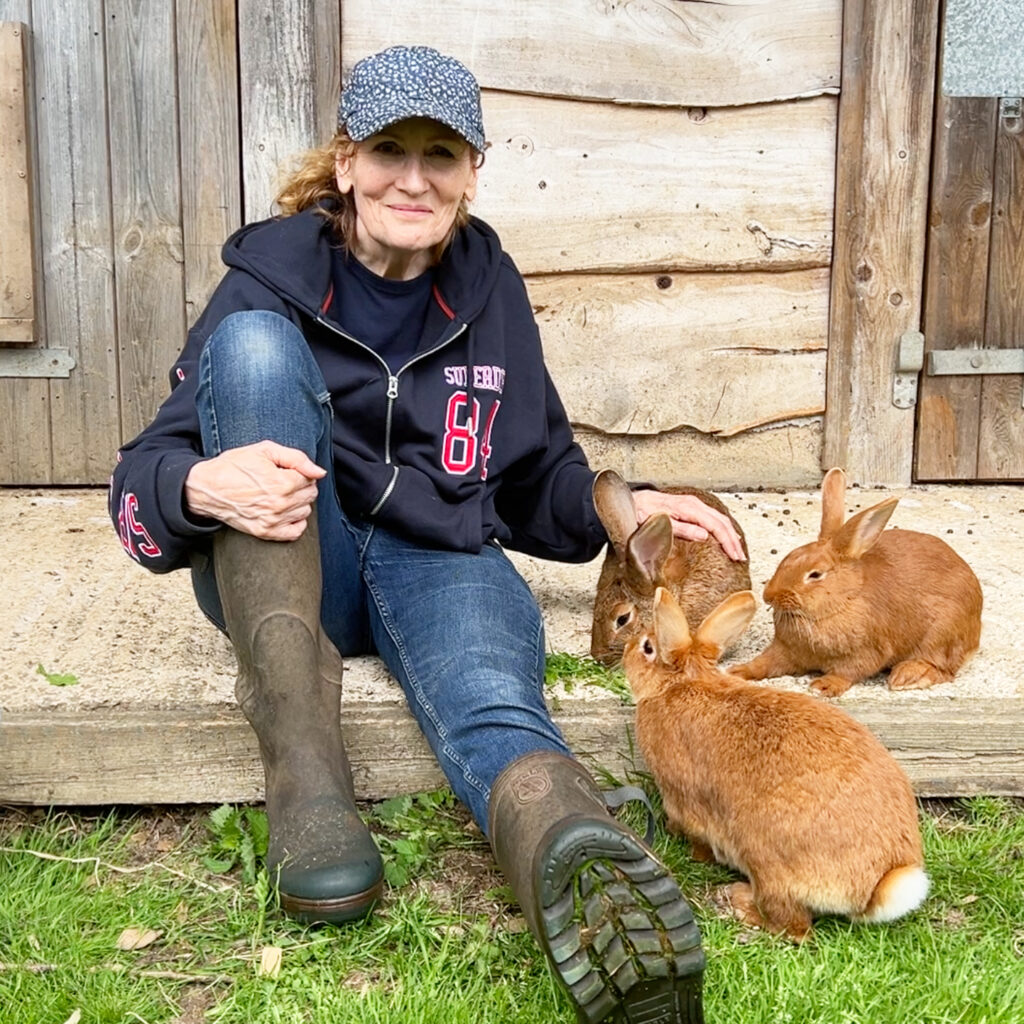
While I can’t tell you exactly what you should do to protect your rabbits, or exactly where you should keep them, I can tell you what I do. The risks I take. And how I think you might be able to reduce those risks if you are not comfortable with them, while still giving your rabbits a good quality of life. Let’s look at the safest option first.
The house rabbit
If your rabbits are solely your pets, then depending on the other occupants of the house, in all probability, the safest place for them, is inside your home.
Obviously you may need to protect your rabbit from other pets because the most common household pets, cats and dogs, are predators.
In my view, it’s not kind to buy a rabbit that is scared of a dog, keep it alongside the dog in a cage at floor level, in the hopes it will get over its fear. The chances are it won’t
Even if your dog has no intention of putting your rabbit on their menu, the rabbit doesn’t know that. And rabbits generally do better in a home where they do not have to share with a predator.
There are exceptions of course. Some rabbits that have grown up around dogs, are completely unafraid of them, and these rabbits may be very comfortable living alongside a friendly dog.
Keeping a rabbit outdoors
Rabbits enjoy being outdoors provided the weather is not too hot. But humans are not the only animals that find rabbits tasty.

So once outdoors your rabbit immediately becomes a target for predators, including birds, mammals and snakes.
Aerial predators
If you have large predatory birds in your area you may need to cover any outdoor rabbit enclosure with a top-net or roof it over completely. In my area we have european buzzards which will take young rabbits. But they are quite shy and our rabbitry is fairly close to our house so the risk is not great.
Small rabbits are also vulnerable to nocturnal owls but you can avoid that problem by shutting your rabbits indoors at night.
We minimize the risk from buzzards by not letting our young rabbits out into the stableyard until they are over about 4lbs in weight. If you have larger birds of prey then you may need to think about restricting your rabbits to a smaller, covered, enclosure.
One risk we did not take into account when first setting up our colony was a risk that is present in most parts of the world. And that is the risk from crows.
Our rabbits sleep in a tack room at night and we open their pop-hole in the mornings to let them out again. We initially left it open all day. Sadly crows hopped in through the pop hole and stole two baby rabbits from their nest before we realized what was happening. So now we keep the pop-hole closed during the day, whenever there are babies in the tack room.
Mammalian predators
Coyotes, foxes, mink, and other four legged hunters including in some areas, feral dogs and cats, are all risks to rabbits. In my area, it’s foxes, badgers, and feral cats that are the main risk. And I have chosen not to eliminate that risk entirely. Because to do so would mean keeping the rabbits in a much smaller, secure pen.
What we do is shut the rabbits in before dusk, and let them out again once the sun is up. Most rural foxes won’t come close to human habitation in broad daylight. And the rabbits have several ‘bolt-boxes’ where they can run to and hide if they are scared.

Setting up an electric perimeter
Our homestead is small and we are constantly working, or around, in the vicinity of the stableyard. If the rabbit area was left alone for long periods during the day, or we had urban foxes which are bolder, we would run an electric wire around the outside of the rabbit’s enclosure. We do this for our hens and turkeys and it works very well to deter predators.

The wire needs to be just a few inches from the ground. This is because foxes and coyotes will sniff along the base of a barrier before deciding whether to attempt to dig under or jump over. Once they have had a jolt of electricity on their delicate nose, they usually decide to find an easier, less painful, breakfast.
You’ll need a length of wire, some insulators to separate the wire from the wire of the enclosure, a car battery to provide power and an energiser to connect the battery to the electric fence.

It really is very simple to do, and much cheaper than replacing all your hens or rabbits. I’m always surprised by how few people set up an electric perimeter around their chickens. I know so many homesteaders or rural folk who have lost chickens to foxes. And this is one of the best ways of protecting your small livestock.
Rats!
Almost every homestead will have an ongoing battle to keep rats at bay. And anywhere where animals are kept in any numbers is attractive to rats.
Rats not only kill and eat baby rabbits, they have also been known to attack and mutilate older rabbits too. So they are definitely not something you want near your bunnies.
It’s fairly easy to make a hutch rat proof, but in a colony set up like mine, or where rabbits have open exercise enclosures, your best protection is to be proactive with your rat control.
My husband and I have spent some forty years working in the pest control industry. So you have it on good authority when I tell you that rats need three things to survive on your property. Water, harbourage, and food. Get rid of any one of these, and rats will not find your property appealing.
Rats need to drink a lot. Be sure not to leave standing water lying around. Turn empty bowls and containers upside down when not in use so that they don’t collect rainwater.
Patches of weeds and rough vegetation are great ways for rats to move from one place to another. This is what we call harbourage. If you keep grass around the outside of your rabbit pen, well mown, rats are less likely to go there. Just tidying up a garden or homestead, removing old plant pots or forgotten bits of machinery, especially near buildings, will go a long way to discouraging rats.
Bird seed, and anything containing seeds or grain, or poultry food is valuable to rats. Keep animal feed in rat proof bins and clear up any spillages promptly.
If you are already seeing signs of rats you need to be more proactive. Rats can be trapped and poisoned, but they are also smart and wary. So if you are not sure how to go about this get some advice from a reputable pest control technician
Snakes that target rabbits
We don’t have any very large snakes in my area. And though both the adder (which is venomous) and the grass snake are capable of taking tiny baby rabbits from a nest, they are very shy and most unlikely to attempt to cross a concrete verandah and enter our tack room through the pop-hole. So they are not really a worry for us.
In some areas, in the USA and elsewhere, there are snake species that will definitely target your rabbits, so you need to find out what the risks are for you. Talk to your veterinarian and other local rabbit keepers and homesteaders. And if necessary you may have to put your rabbits behind a mesh barrier, with small enough holes to prevent access.
Thinking about the trade-off
The trade-off between risk and enrichment affects us all throughout our lives. It affects our other pets too. My hunting dogs are subject to cuts and scratches and even have to be stitched up occasionally. Are they happier for being allowed to hunt and retrieve. I believe so. And most of us humans would agree that life without some risk would be less of a life.
I can’t tell you where you should draw the line with your own rabbits. I can’t tell you how risky is too risky. Because it’s a personal matter. It’s not just about facts and numbers, it’s about how you feel too.
I hope you found it helpful reading about how I protect my own rabbits. Whatever you choose to do for your rabbits in the way of precautions against predators, I hope they stay safe and happy!
Let me know if you have ideas or suggestions to add to this topic. You can put them in the comments below
Free Rabbit Updates!
Get rabbit tips, news, reviews and the latest from Just A Few Rabbits, delivered to your inbox


