Where Should I Keep My Rabbit?


Rabbits live in hutches don’t they? Well, not nowadays. At least not as often as they used to.
These days rabbits can be found in very fancy outdoor quarters complete with patios and grassy recreation areas. Or living indoors alongside dogs and other household pets.
Rabbits need plenty of space, and access to growing grass or hay. So they can be kept indoors as house pets. Or they can live outdoors with access to a grassy exercise pen that is securely protected from predators, and with shelter from sun and strong winds.
Indoors Vs Outdoors
House rabbit proponents will sometimes insist that rabbits should only be kept indoors and that any kind of cage or confinement is cruel.
The truth is a little more complex and how you keep your rabbit may depend partly on your budget and on the climate zone you live in. But it should also take into account a rabbit’s basic needs and habits, which can sometimes come as a surprise to new rabbit keepers.

I think that sometimes house rabbit enthusiasts tend to gloss over some of the challenges involved in keeping a rabbit indoors. My own feeling is that it’s better to be honest and let people know what to expect, as this avoids rabbits being abandoned or cast out, by people that are not really equipped to live alongside them.
So what you’ll find here, are the pros and cons of keeping rabbits indoors or out, and in different types of accommodation
Your rabbit needs plenty of space
Rabbits need a lot of space. They are extremely fast and agile animals capable of accelerating rapidly and reaching speeds of 30-35 mph in the space of a few seconds. This ability to outrun and out-turn most other animals, is the rabbit’s only defence from predators in the wild, and it is powered by the rabbit’s large and muscular back legs.
Keeping a rabbit in a hutch is not only unkind, it misses the point. Part of the joy of living with rabbits is watching these stunning creatures leap, twist, turn, and race around. Rabbits clearly gain pleasure as well as health benefits from exercising. They run and jump for fun, not just to escape, and they need space in which to do this.
This need for space works well for house rabbits and will entertain you greatly. But it is a big problem for a rabbit that spends too long confined in a hutch. So all rabbits housed outdoors need access to an exercise area where they can get up some speed, and kick up their heels.
Rabbits need hay or growing grass
Many people think that rabbit food comes in packets. It doesn’t. At least not the majority of it.
The core of any rabbit’s diet needs to be growing grass or hay. Small amounts of rabbit kibble or pellets can be added to this but unless you have sufficient pasture for your rabbit to graze they will need hay. A lot of hay.
This works less well for house rabbits. That’s because rabbits are messy eaters, and feeding hay in sufficient quantities without turning your home into something resembling a barnyard, can be a bit tricky.
Not impossible, but tricky.
Rabbits can be house trained – up to a point
Like dogs and cats, rabbits can be trained to use a litter tray to pee and poop in. Some rabbits are really good at this.
Our Continental Giant rabbit Heidi, was so addicted to her litter tray inside the tack room where she slept at night, that even when given the run of a large grassy stable yard, she would never, ever poop anywhere other than her litter tray.
I have to say that not all rabbits are so obliging. I have other rabbits that will pee in a litter tray, and put quite a lot of their poops in there, but are not averse to leaving a trail of poops in other places from time to time. A house rabbit might not be for you if the thought of this appals you.
There’s more.
Some rabbit habits are unusual…
You might think that the odd bunny poop or three isn’t a big deal, as bunny poops are dry and easily swept up. But that’s not quite the whole story. Rabbits have a complicated digestive process and part of that process includes digesting food twice.
A bit like a ruminant does with their multiple stomachs. But rabbits have a different method to tackle double digestion. They eat their own poop.
Rabbits have two types of poop. The first type, called cecotrophs, are soft and are eaten directly from the rabbits own bottom. If you see a rabbit munching away with their head tucked down between their legs, this is what they are doing.
The second type are the hard, inoffensive, bunny droppings that we are familiar with.
Problems with cecotrophs can arise with house rabbits, because some rabbits over produce them and don’t consume them all.
These sticky, strong smelling, poops can then be left around your home and can get squashed into the carpets or furniture. This isn’t a problem with all rabbits but it can happen, and is something to be aware of when considering where to keep your new friend.
Rabbits are social
Rabbits need company. These are highly social animals that enjoy living in groups alongside other rabbits. Fortunately, most rabbits will accept a human substitute for company and like dogs, a single rabbit can live happily enough in a family home where people are around for much of the time.
If you keep your rabbit outdoors you need to think about how you will provide the company that rabbits need. Keeping two rabbits as a pair is one option, but they need to have been together from a young age. You can’t just dump two rabbits that don’t know each other into the same hutch and hope they’ll get along.
Unless they are less than three months old, two males or two females will almost certainly fight.
A male and female may get along, unless you are putting a male into the female’s territory, which she will defend.
Bear in mind that, unless one or the other is neutered (an expensive and potentially risky procedure), the two new best friends will produce you a litter of 6-8 babies approximately every four weeks. Each of whom will be capable of doing the same within the next four months.
Yes, rabbits really do breed like rabbits.
Rabbits are strong
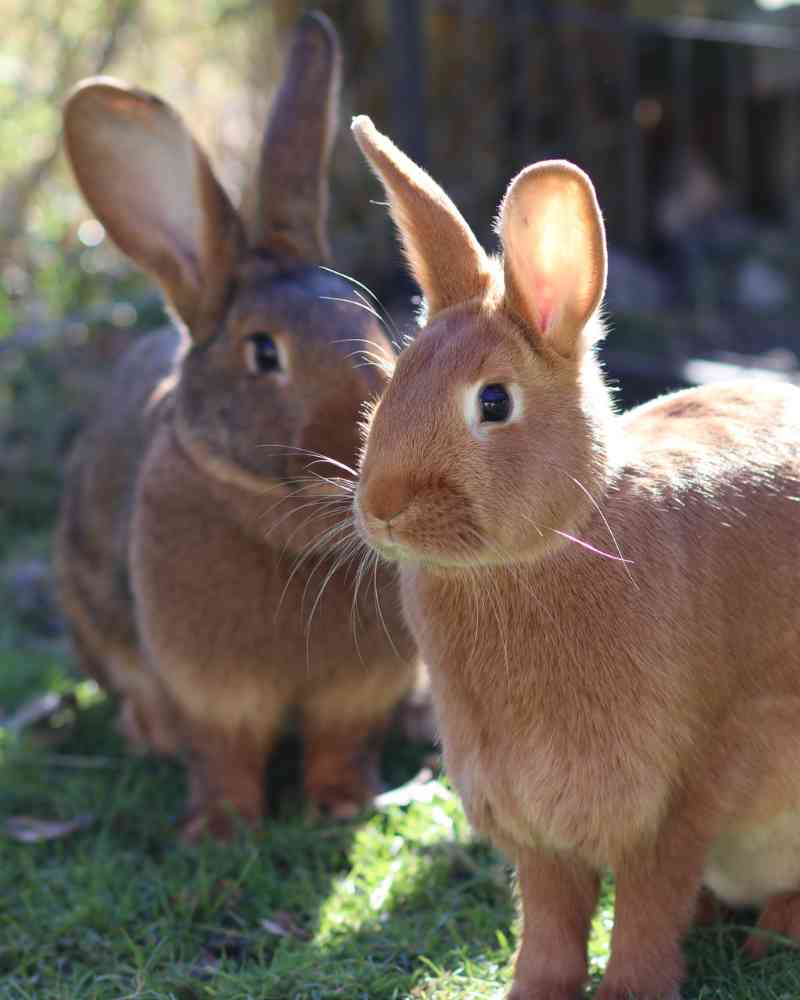
The biggest challenge for parents that buy rabbits for their children is the combination of those powerful back legs we talked about earlier, together with the fact that rabbits have a serious aversion to being picked up.
Rabbits are prey animals, they are a brilliant source of food for many carnivorous mammals and birds. So for a rabbit, being picked up is their absolute worst nightmare.
And while you can teach a rabbit to submit to being picked by by regular handling, you can never teach them to enjoy it. And sooner or later, a rabbit will scratch the person picking it up.
It is difficult to interact with a rabbit while they are inside a hutch, and so for many rabbits, that first scratch means a lifetime of neglect and isolation
Children need to interact with rabbits
If you want your children to enjoy their rabbits and maintain an interest in them, they need to be able to interact with them, without getting scratched.
That means getting down on the ground at the rabbits level. And letting the rabbit choose when to approach and be petted by their human friends.
The best way to enable this kind of interaction between kids and their rabbits is indoors, or in a large secure pen that children can get into, alongside the rabbit.
If rabbits are kept in hutches, it often becomes impossible for children to interact with them very much at all, as most kids cannot manage to lift and subdue a reluctant and kicking rabbit without getting badly scratched.
As a result children interact less and less with their hutch rabbits and eventually give up on them.
You are probably getting the idea that I don’t think a lot of hutches by this point. And you’d be right. They can be a suitable source of temporary accommodation, for quarantine purposes for example. Or for keeping a rabbit safe during the night. But hutches are simply not ideal places for a rabbit to live long term.

Rabbits dislike heat
Most people who keep their rabbits outside worry about them getting cold in the winter. Unless you live in a region with very severe winters, you probably do not need to worry about this at all.
Rabbits actually like the cold and are extremely well equipped to cope with it. They have a very warm layered coat with thickly furred feet and are quite happy being out and about in snow or rainy weather.
What rabbits really hate is heat. In any temperature much over 75 F rabbits start to get uncomfortable and seek out cool surfaces. This aversion to heat and resistance to cold is an important consideration when figuring out where to house your rabbit.
If you live in a hot area or a region with very hot summers your rabbit is likely to be a lot happier in an air conditioned house than outdoors. If you do keep a rabbit outdoors you will need to make sure they have shade throughout the day, and provide extra cooling assistance in very hot spells (see article on cooling )
Conversely, if you live in a cooler climate, the reverse may be true. Your rabbit may find your centrally heated home uncomfortable, and might be a lot happier outside.
Rabbits chew a lot
A rabbit’s teeth are constantly growing. And rabbits need to chew in order to keep their teeth short. Plenty of hay will help with this, as will chew toys, but rabbits, like puppies, will also chew on pretty much anything else within reach that takes their fancy.
Unlike puppies, with rabbits, this habit lasts a lifetime. And a rabbit can do a lot of damage to baseboards, and furniture if given free run of your home without supervision.
If you decide to keep your rabbit indoors, then it’s a great idea to have a large dog crate where the rabbit can be secured when you can’t supervise them. A tiled room such as a bathroom might also work.
But unless you have eyes in the back of your head, you do need to accept that the chances of your rabbit chewing something you own, at some point, are high.
Ideal housing for a rabbit
The ideal set up for rabbits will be a home base of a large secure pen with plenty of room for their human friends to join them inside. And access to an even larger, secure area outside that home base.
Indoors a puppy playpen or very large dog crate can make a good rabbit pen. There needs to be room inside the pen for a litter tray full of hay (rabbits like to eat while they are on the toilet) and space to hop about. When you are home, the door to the pen should be open so that the rabbit can come out for exercise and play.
Outdoors a small garden shed can work well as a rabbit base, or part of a larger shed or garage can be converted to a pen. The rabbit pen will need an outdoor covered exercise area that the rabbit can access via a pop hole that can be closed at night for their safety.
The most forgotten pet
An outdoor rabbit’s accommodation should be near enough to the house that people don’t forget about them and neglect them.
You might think that a hutch with an outdoor run attached is sufficient, but unless the run is a spacious, pleasant place that people can easily enter and sit inside in comfort, you’ll find the rabbits will soon get forgotten, especially in poor weather.
This isn’t simply my view. Most vets will confirm that rabbits are among the most neglected pet animals they see. The complex digestive system, behavior and social needs of these beautiful animals are widely misunderstood.
Rabbits are the forgotten pet. But it doesn’t have to be this way. Your rabbit deserves better than a hutch in the backyard.
Do consider having your rabbit indoors, and if that’s not for you, then make sure your new friend has as much space and company in their outdoor accommodation as they possibly can.
Free Rabbit Updates!
Get rabbit tips, news, reviews and the latest from Just A Few Rabbits, delivered to your inbox


